
Early one morning last winter—one chilly morning last February, to be exact—I sat on the edge of the bed staring at my knees like they were two insubordinate players refusing to run drills. The house was dead quiet, the Phoenix desert air was uncharacteristically bitey, but my joints were making enough noise for a full locker room. It wasn't just the ache; it was the structural resistance, that feeling that my legs had been replaced by rusty gate hinges while I slept.
After thirty years on concrete gym floors, coaching basketball and track, the doctor's 'osteoarthritis' diagnosis felt like a technical foul I couldn't argue with. I spent three decades telling kids that consistency matters more than intensity and that recovery is not optional, yet here I was, the PE teacher who never stretched, facing the bill for every fast break and vertical jump I ever demonstrated. My doctor suggested I try a supplement stack before we talked about anything invasive. Being the obsessive coach I am, I decided to treat my recovery like a season-long scouting report. I wasn't just going to 'feel' better; I was going to track it.
The Problem with Pain Scores
When I first started this journey, I did what everyone does: I rated my pain on a scale of one to ten. But I quickly realized that tracking daily joint pain scores is counterproductive. There’s a psychological trap called hypervigilance—the more you focus on the discomfort to 'score' it, the more your brain amplifies the perception of that pain. If you're constantly asking your knees 'how do you feel now?', they’re going to find something to complain about. It’s like a ref looking for a foul on every play; eventually, he’s going to blow the whistle for nothing.
I needed a different game plan. I needed metrics that didn't rely on my mood. I’m not a doctor or a physical therapist—I have zero medical training—so I didn't care about the cellular mechanics. I cared about whether I could get down to pick up the dog's ball without groaning. I decided to track three specific 'drills' that mirrored the fundamentals of movement. I started logging every 1500 mg dose of glucosamine sulfate—the standard recommended daily dose—and measuring it against my actual performance in the real world.

The Three-Drill Tracking System
My system focuses on functional output. If I can move better, the supplement is doing its job. If I'm still stiff after an hour, we're stuck in a rebuilding year. Here are the three pillars of my morning scouting report:
- The Stair Test: I have a specific set of bleachers at the local park. Every morning, I descend them. I pay close attention to the third step. For months, I’ve felt a sharp, dry 'click' in my left patella when I descend that third step, feeling like a gear skipping a tooth. I don't rate the pain; I rate the 'smoothness' of that gear.
- The Dog Ball Reach: My lab doesn't care about osteoarthritis. She wants her tennis ball. I track how far I can hinge at the hips before my lower back and knees demand a 'timeout.'
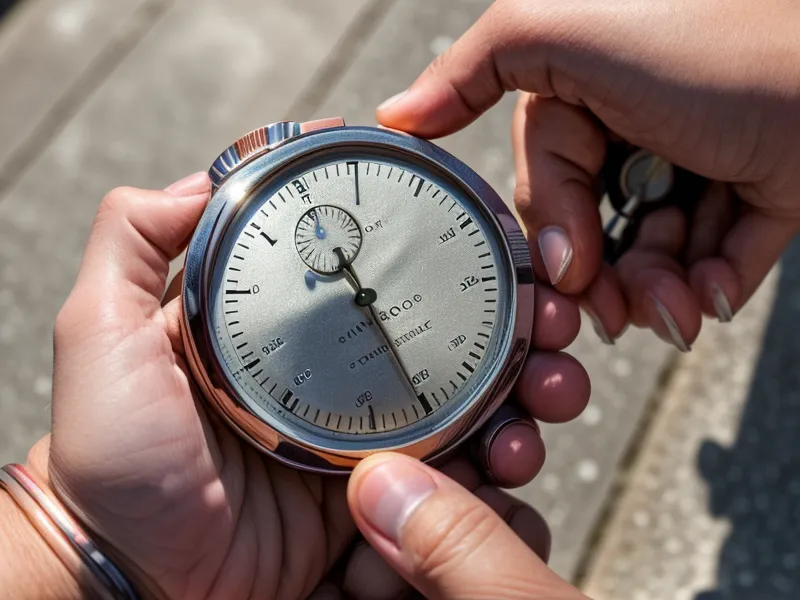
- Warm-Up Time: This is the big one. I time how long the 3 AM stiffness lasts after I finally roll out of bed. In the beginning, it took me nearly forty minutes of shuffling around the kitchen before I felt like I could walk normally.
I’ve written about this before in my notes on the morning staircase test, but the key is the consistency of the measurement. You can't change the drill halfway through the season and expect clean data.
Mid-Season Adjustments and the Phoenix Heat
By the time I was about six weeks into the new stack—which included a turmeric extract standardized to 95% curcuminoids—I started noticing the trend lines shifting. I’d sit at my desk, and as I logged my morning mobility score into my notebook, I’d catch the faint, earthy smell of turmeric powder on my fingers. It’s a smell that has become synonymous with my morning routine, a sensory reminder that I’m sticking to the fundamentals.
Then came mid-July during the Phoenix heatwave. When it hits an average high of 106 degrees Fahrenheit, everything in the desert expands, including my frustration. You’d think the heat would help the joints stay 'warm,' but the barometric shifts during monsoon season can be a real bear. I noticed that while my 'Dog Ball Reach' stayed consistent, my 'Stair Test' click became more pronounced. This is where the tracking pays off. Instead of panicking and thinking the supplements stopped working, I could look at my log and see that my warm-up time was still significantly lower than it was back in February.
Measuring the Gym Floor Tax
The real turning point came in early September. I was at the community center, and I found myself walking across the gym floor. Now, a standard high school basketball court is 84 feet long. For years, walking that distance first thing in the morning involved a visible limp and at least three stops to 'shake it out.' I realized halfway across the hardwood that I hadn't stopped once. I wasn't thinking about my knees; I was thinking about the poor form of the kid shooting free throws at the far end.
That is the ultimate goal of tracking: to reach a point where you stop tracking because the movement has become natural again. I’m still paying the concrete floor tax from my coaching days, but the interest rate has finally dropped. My tracking showed that the biggest shift wasn't a sudden 'miracle' fix, but a gradual reduction in the time it took for my body to find its rhythm. I wasn't just 'feeling' better; I was moving through the 84-foot gauntlet without a technical foul from my patella.
Final Coaching Notes
If you're going to start your own log, keep it simple. Don't get bogged down in the science of cartilage breakdown—leave that to the professionals and be sure to talk to your own doctor before you start dumping pills down your throat. I'm just a guy who spent too long on the sidelines; I'm not giving you a prescription, I'm giving you a game plan. Focus on what you can do, not how much it hurts. If you can shave five minutes off your morning 'warm-up time,' that’s a win in the standings.
I'm not looking for a miracle, and I'm certainly not expecting to dunk a basketball again. I just want a better trend line. My logs prove that while the concrete floors won the first half of my life, the right supplement stack and a bit of discipline are making the second half much more playable. We aren't skipping the fundamentals anymore. We're running the floor, one 84-foot stretch at a time.