
It usually happens around 3 AM. The house is dead silent, the Phoenix desert air is finally cooling off outside, and I’m staring at the ceiling because my right knee feels like it’s being slowly tightened in a heavy-duty bench vise. After thirty years of pacing the sidelines and demonstrating chest passes on concrete gym floors, I used to think I could just 'wait and see' my way out of any ache. But when the pain starts acting like a whistle-blowing referee in the middle of the night, you realize the 'wait and see' approach is officially winless.
When my doctor first sat me down and said the word osteoarthritis, I felt like a player getting cut from the varsity squad. He suggested I try the supplement route before we talked about anything invasive, but he didn't give me a playbook. He just said to see how I felt in a few months. As a coach, 'seeing how you feel' is a terrible way to run a program. If you can’t measure the performance, you can’t make the cuts. So, I decided to treat my knees like a rebuilding team. I dug out an old coaching whistle (mostly for the nostalgia) and a fresh spiral notebook to start my own sideline log.
The Fundamentals: Why Your Gut Feeling is a Bad Stat Sheet
Early last December, I realized my data was a mess. I’d take a pill for two weeks, have one good day where I could walk the dog without a limp, and think I’d found the Holy Grail. Then a cold front would blow in, the stiffness would return, and I’d toss the bottle in the trash, convinced it was snake oil. I was the PE teacher who never stretched—I was looking for the highlight reel instead of focusing on the fundamentals. Consistency in tracking matters more than the intensity of the 'feeling' on any given Tuesday.
The problem with joint health is that it’s not a linear progression. It’s more like a long season with plenty of away-game slumps. Most people fail their supplement trials because they don’t account for the noise. If you don't have a standardized way to measure your movement, you’re just guessing. I looked into the professional versions, like the WOMAC index, which is a set of 24 questions doctors use to grade pain and function. It’s thorough, but a bit clinical for a guy who spent three decades in a whistle and mesh shorts. I needed something I could track while my coffee was brewing.

The Big Three: My Daily Scouting Report
To really see if my 1,500 mg of glucosamine—the standard clinical dosage I saw in the old GAIT studies—was actually doing anything, I narrowed my tracking down to three specific metrics. These aren't fancy, but they are repeatable. I call them 'The Big Three'. Every morning, before I even think about checking the sports page, I record these in my log.
First is the Morning Stiffness Duration. This is the big one. I track how many minutes it takes from the moment my feet hit the floor until that specific gritty, sandpaper sensation behind the right kneecap starts to fade during the first few steps of the day. In the beginning, I was looking at forty minutes of 'warm-up' time just to get to the mailbox. I’ve written before about why I started tracking my morning warm-up time instead of just 'feeling' better, and it remains the most honest stat in my book.
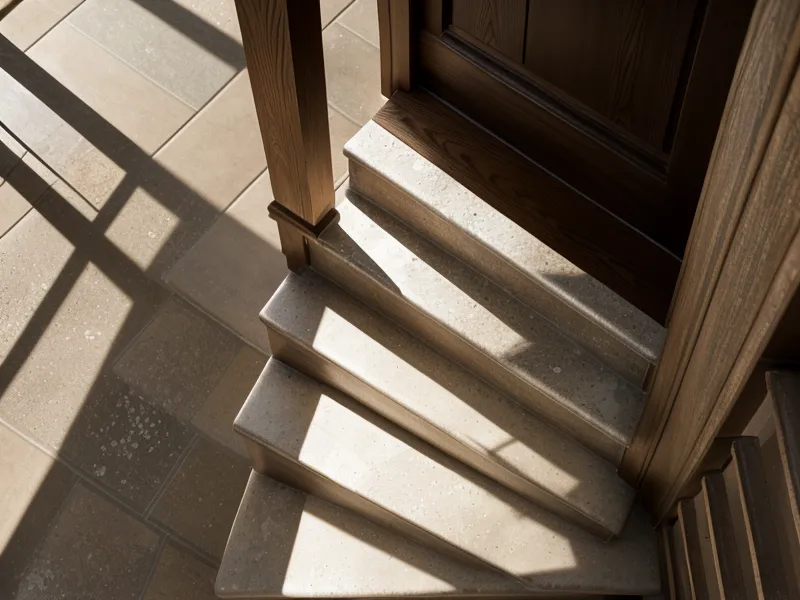
The second metric is the Sunken Living Room Test. If you live in a certain era of Phoenix suburban home, you know the two steps down into the living room. Going up is easy; going down is where the 'grind' happens. I rate the descent on a scale of 1 to 10. If I have to white-knuckle the railing just to go get a glass of water, that’s a 10. If I can float down like I’m walking onto an 84-foot high school basketball court for tip-off, that’s a 1. Most days, I’m somewhere in the messy middle.
Third is the Dog Ball Retrieval. My dog has a habit of dropping his tennis ball exactly where I have to bend the most to get it. I noted the hollow, rhythmic thud of the dog's tennis ball hitting the Saltillo tile while I'm frozen at the top of the stairs, dreading the reach. Can I get down there and pick it up without a grunt that sounds like a dying transmission? That’s my mobility metric. It’s the ultimate low-post move for a 58-year-old.
The Mid-Season Turning Point: Humidity and the Great Lie
Around mid-March, after about six weeks of being religious with my tracking and my pills, I thought I’d hit a wall. My numbers were trending in the wrong direction. The 'sandpaper' feeling was back, and the stairs were becoming a chore again. I was ready to bench the entire supplement routine. But then I looked at the weather log I’d been keeping in the margins of my notebook. We’d had a series of weird, humid pressure shifts that precede our spring transitions.
This was my biggest revelation: Tracking joint supplement efficacy via daily pain logs is often misleading because cyclical inflammation patterns frequently mask the subtle, cumulative recovery benefits of things like collagen and chondroitin. My joints weren't failing because the supplements stopped working; they were reacting to the environment. If I hadn't been tracking the weather alongside my stiffness, I would have made a 'roster cut' that I would have regretted later.
I realized that supplement recovery is a game of inches, not touchdowns. You have to look at the 30-day rolling average, not the daily score. When the July heatwave hit, I noticed something interesting. Usually, the extreme heat makes me stay inside on the AC, which leads to more stiffness from inactivity. But my log showed that despite the heat, my 'warm-up' time had dropped from forty minutes down to about fifteen. That was the 'inner truth' moment. The pills weren't making me feel like a teenager, but they were raising my floor. I wasn't falling as deep into the pain pits as I used to.
The Methodology of a Retired Coach
If you’re going to do this, you have to be methodical. I’m not a doctor, and I’m certainly not a physical therapist—I’m just a guy who’s paid the concrete floor tax for way too long. Before you start any new regimen, you need to talk to your own doctor to make sure you aren't going to have a bad reaction to the ingredients. But once you get the green light, treat it like a training camp.
- Keep the log by the coffee: If it’s not convenient, you won’t do it. My notebook lives right next to the beans.
- Don't skip the fundamentals: Take the supplement at the same time every day. Inconsistency is the fastest way to ruin your data.
- Note the external factors: Did you spend three hours on a ladder? Was there a monsoon? Did you eat an entire pizza? These things affect the 'game tape'.
- Ignore the daily noise: Look for the trend lines over 6 to 8 weeks. Recovery is not optional, but it is slow.
I’ve tested over a dozen different bottles by now. Some were total busts—usually the ones that promised 'overnight relief' (which is coach-speak for 'we’re lying to you'). The ones that actually seem to move the needle are the ones that quietly improve the 'Big Three' over the course of two months. It’s about building a foundation, not just masking the symptoms for an afternoon.

The Final Score
The goal of tracking isn't to find a miracle cure. I know my knees are never going to be 18 again. The goal is predictability. I want to know that if I take my supplements and keep my mobility drills up, I’ll have enough 'tread on the tire' to say yes when my wife asks if I want to go for a walk around the block or when the dog wants to play a round of fetch.
Last week, I realized I hadn't groaned once while picking up the dog's ball for three days straight. I didn't even notice it until I looked back at my log and saw the '0' in the grunt column. That’s a win in my book. It’s not a championship trophy, but it’s a solid season. If you’re struggling with the 'sandpaper' knees or the 3 AM wake-ups, stop guessing. Grab a notebook, start your own sideline log, and see what the data actually says. You might find that the fundamentals are still the best way to stay in the game.