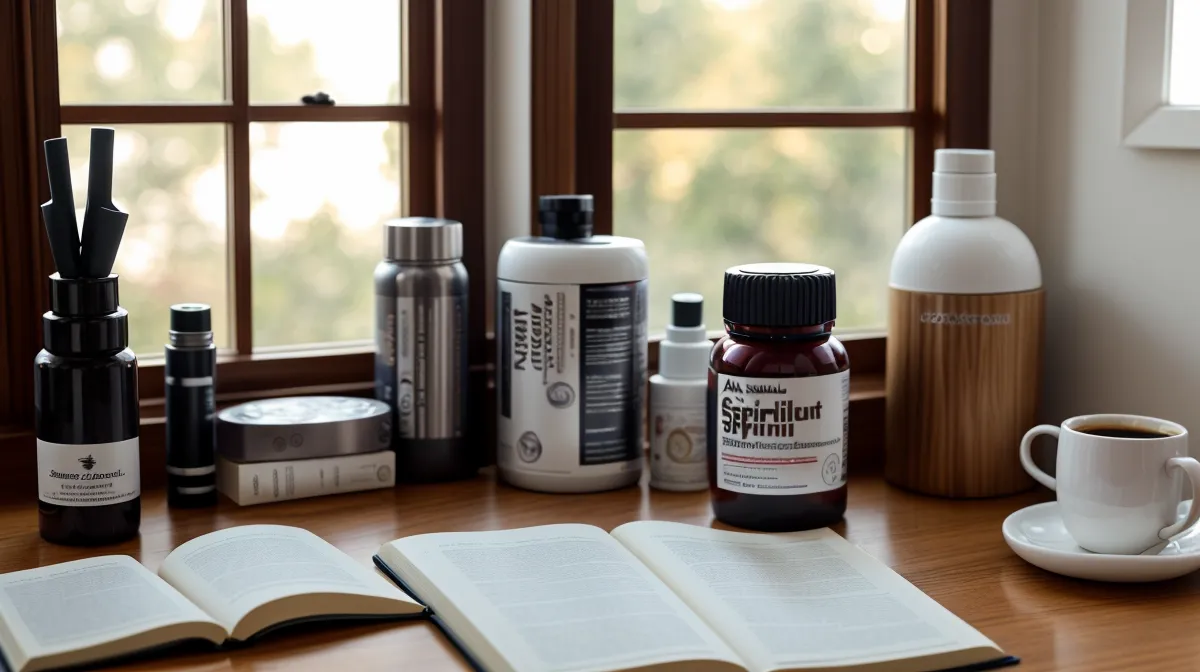
Two hours is how long I sat through a full basketball game on aluminum bleachers, and when the horn sounded, I stood straight up — no old-man shuffle, no grabbing the row in front of me to get my knees to cooperate. That's not a dramatic before-and-after photo, but it's exactly the kind of detail that matters when you're testing joint supplements for knee pain during squats and everyday moves like sitting down. My knees carry a diagnosis now — osteoarthritis — courtesy of thirty years coaching on concrete gym floors, and a doctor who suggested supplements before anything more invasive.
Standard disclosure before we go further: this site runs on affiliate links, and if you buy something through one of them, I earn a commission at no extra cost to you. I've spent four years running joint supplements through my own tracking notebook, comparing stiffness scores and stair tests the same way I used to time sprints for my track kids. I'm not a doctor or a physical therapist — just a retired PE teacher whose joints apparently took notes on every one of those thirty years, which is a hell of an irony for a guy who told hundreds of teenagers to stretch and never once did it himself.
What Squatting Actually Does to an Osteoarthritis Knee
For thirty years, I coached basketball and track on concrete gym floors that gave nothing back — no cushioning, no forgiveness, just the full shock of every whistle and jump shot traveling straight up into the synovial fluid and cartilage in my knees. Coaches don't stretch. We yell at other people to stretch, which turns out to be a different skill entirely. The 3 AM wake-ups started a few years into retirement, and by the time I saw a doctor, I was bracing for a conversation about surgery. Instead, he used the phrase "greasing the hinges" and sent me home with a list of supplements to try first.
These days I log every morning's stiffness in the same kind of spiral notebook I used for sprint splits, which is its own small system worth a separate breakdown rather than a paragraph here. How long that stiffness window actually lasts each morning — ten minutes versus a full hour — is a different tracking project entirely, and one I keep running on its own timeline.
The Costco Bottle That Didn't Move the Needle
Not every attempt worked, and the failures are worth mentioning as much as what stuck. A bottle of glucosamine and chondroitin tablets from Costco was my first real attempt, taken every day for two full months before I admitted the morning stiffness hadn't budged and the sandpaper feeling in my left knee during a squat was exactly where it started. That's not a knock on glucosamine broadly — plenty of people do fine on it — it's just what my own notebook showed for that particular bottle over that particular stretch.
Before trusting any of this, it helps to know what a knee with absolutely nothing in the tank feels like first, which is its own separate experiment I've run on the side, apart from whatever product I happen to be testing at the time.
The hyaluronic acid angle is what actually shifted things for me, mostly because it didn't ask me to swallow six pills to get there. I've gone deeper into how hyaluronic acid for joint lubrication helps with morning stiffness elsewhere, but for squatting specifically, what mattered less was the science and more whether my knee could bend past ninety degrees without complaint.
Joint Genesis Against the Classic Glucosamine-Chondroitin Route
Once the Costco route stalled out, I moved to Joint Genesis, which uses a patented ingredient called Mobilee and comes with 11 clinical studies behind it — more backing than I usually see on a supplement label. It's a single capsule a day, which matters more than it sounds like it should when you're trying to build a habit instead of adding a chore. The ginger root dose sits at 200 mg, lower than some standalone ginger supplements I've compared it against, and the company backs it with a 180-day money-back guarantee, which is close enough to a full season to actually judge whether it's doing anything.
When you take the capsule matters less than consistency does — morning with breakfast or evening before bed, it's the daily habit that counts, not the clock you take it by. None of this replaces what's happening in the joints above and below either, and I've laid out best low impact exercises for osteoarthritis knees and supplements separately for the days when squatting isn't the only thing acting up.
A fuller side-by-side of Joint Genesis against straight glucosamine and chondroitin lives elsewhere on the site if you want the granular version. The short of it: JointVive sticks with the classic combo, adds MSM and turmeric, and asks for more capsules to get there. You can read the full notes in JointVive for cartilage support if the traditional route interests you more than the newer one. Both companies are honest that you're looking at six to eight weeks before you notice anything real, so day-three reviews from anybody are noise. Between the two, JointGenesis is the one I've stuck with for the long haul, mostly because the single-capsule habit was easier to keep than the multi-pill one.

Pills or a Program: Which Comes First?
Plenty of people don't want another bottle in the cabinet, and that's a fair position to start from. Boyd, an old coaching rival from across town, now just a guy I trade knee complaints with, is skeptical of paying real money every month for a bottle of anything, and he's not wrong to ask the question before buying a subscription to whatever's trending. For him, and for anyone who'd rather skip pills entirely, I tested the Ageless Knees program, a physical therapy-based approach that costs less than twenty bucks and skips supplements altogether.
I wrote up the full comparison in After Decades on Concrete Floors, I Tested the Ageless Knees Program Against My Supplement Routine, and the short of it is that it builds the muscle around the joint rather than changing what's happening inside it, the other half of the equation, whether you're taking a capsule or not.
The same basic stair test gets run on every approach before I trust it: five flights, no banister, whichever knee complains first tells you more than a label ever will. Cost-per-day is worth tracking too, rather than sticker price, since that's the only fair way to weigh a one-time program against a monthly capsule.
Reading the Fine Print Before You Buy
A reader named Arthur Belmonte, a retired electrician who emails me his own tracking numbers, has a dry sense of humor about the whole indignity of aging joints. He once compared his to a used car that fails inspection every single year. He's the one who pointed out that most people skip the ingredient panel entirely and just trust the front label, which is backwards. Checking the actual dose — like that 200 mg ginger figure on Joint Genesis, or whether a formula discloses milligrams at all — tells you more than a five-star review ever will. Phoenix summers throw another variable into the mix too: heat changes how loose or tight a joint feels regardless of what's in your system, so anyone comparing month to month needs to account for the season before crediting or blaming a supplement.
Final Whistle: Which Route to Try First
Here's the actual breakdown, coach to whoever's reading this with a bad knee and a squat that hurts more than it should. If squatting pain is the main complaint and the goal is the lowest-effort daily habit, start with Joint Genesis — one capsule, hyaluronic-acid-based, and give it the full six to eight weeks before judging it. If glucosamine already works for your body and a traditional formula with extra anti-inflammatory ingredients sounds better, JointVive is the stronger fit even with the extra capsules. And if pills aren't the plan at all, or the budget says no to another subscription, Ageless Knees is worth running alongside whichever one gets picked — not instead of it, necessarily, but as the muscle-building half of the equation. None of this replaces an actual conversation with your own doctor, especially with an osteoarthritis diagnosis already on the books.
The bottle still sitting on the counter after four years of testing everything else is Joint Genesis, and it's the one that got two hours of bleacher sitting to end without a single old-man shuffle. Start where the evidence in your own notebook points you, and give whatever you pick the same patience a training cycle deserves.